How Advanced Rust Research Is Helping Protect Sunflower
Drones have Sunflower rust remains one of the most unpredictable and yield-limiting diseases facing sunflower producers across North America. While the pathogen can spread rapidly under favorable environmental conditions, dedicated efforts in applied pathology are arming growers with the tools needed to safeguard their crops. One researcher joining in these efforts is Dr. Brandt Berghuis, whose comprehensive project focuses on identifying rust resistance, optimizing chemical controls and collaborating with international networks to manage disease evolution.
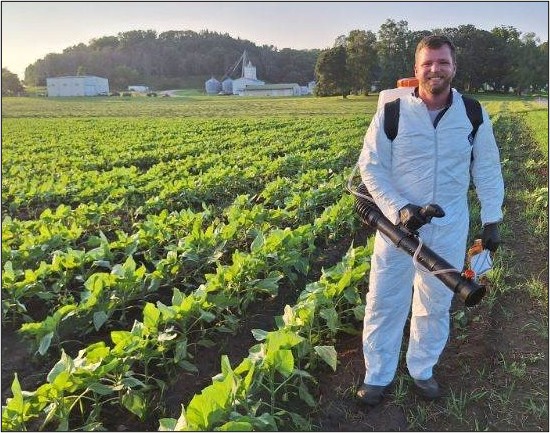 |
| Dr. Brandt Berghuis working in one of the River Falls field plots a few weeks after emergence. |
Multi-Pronged Approach
The core objective of Berghuis’s current research project is strictly applied, aiming to give growers actionable, effective disease management options. To mitigate yield loss, his lab team operates on several key fronts:
• Genetic Screening and Resistance Identification — Berghuis conducts extensive greenhouse and field screenings to discover new sources of genetic resistance to rust. By identifying fixed breeding lines, the research team helps ensure that commercial seed companies can integrate stable rust-resistant traits into next-generation sunflower hybrids.
• Chemical Protection and Efficacy Trials — Beyond genetic host resistance, chemical management remains a crucial tool during disease outbreaks. Berghuis’s trials evaluate the efficacy of various commercial fungicides and adjuvants. By identifying which active ingredients and tank mixtures offer the strongest protection, data-driven recommendations on product selection and application timing are generated.
• Global Pathogen Monitoring — Sunflower rust is a global threat, and pathogen populations continuously adapt, giving rise to new virulent races that can overcome resistant hybrids. Berghuis actively collaborates with national and international pathology networks. His team serves as an evaluator for external graduate studies—such as research at the University of the Free State in South Africa focused on rust virulence—and sits on doctoral committees in sunflower pathology. This global collaboration ensures that shifts in rust virulence are spotted early, helping North American breeders stay ahead of emerging races.
Drones & Precision Data
Managing field trial plots requires fast, accurate data collection. To streamline this, Berghuis’s team integrates modern technology into their field protocols.
The program utilizes unmanned aerial vehicles (drones) for two primary applications: aerial imaging and aerial inoculations. High-resolution aerial imaging allows researchers to monitor plot progress, track disease progression across large trial areas and evaluate overall field conditions efficiently.
“These data are helpful for researchers to get updates on their research plots and field conditions,” Berghuis says. “I think these tools are helpful, but looking forward to seeing how they further advance over the next decade.”
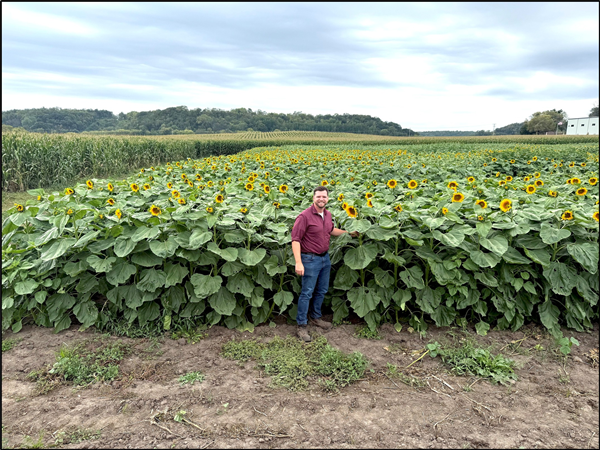 |
| Dr. Brandt Berghuis checks a western Wisconsin field in early bloom. |
From NDSU Roots to Global Impact
Berghuis’s focus on sunflower health stems from a long-standing foundation in Upper Midwest agriculture. His academic path began at North Dakota State University (NDSU) in 2011, where he earned a degree in crop and weed science before transitioning into the plant pathology department in 2012. During his time at NDSU, he trained under prominent mentors, including Dr. Janet Knodel, Dr. Andrew Friskop, Dr. Samuel Markell and graduate researcher Dr. Ryan Humann.
In 2016, Dr. Berghuis began his Ph.D in plant pathology under Sam Markell. His doctoral work focused heavily on sunflower pathology, giving him first-hand experience working directly alongside growers at field days, participating in disease surveys across California with then-USDA plant pathologist Tom Gulya and presenting research at National Sunflower Association (NSA) meetings.
Now based at the University of Wisconsin–River Falls (UWRF), Berghuis finds himself researching sunflower in a region where the acreage looks vastly different from the dense production zones of the Dakotas. Sunflower is considered a minor crop in Wisconsin, but for Berghuis, the motivation to stay focused on rust research remains strong.
“To be honest, I think it really comes down to the community of the sunflower industry,” Berghuis says regarding his ongoing dedication to the crop. “I made a lot of friends who work in that industry, and initially it gave me an avenue to connect with them and continue to support the sunflower industry.”
His plots at UWRF serve dual purposes: the primary goal is providing crucial research data for producers, and secondarily acting as a point of agricultural outreach to a wider audience.
Beyond its agronomic value, sunflower holds a unique place on the local landscape. “Since it is a minor crop in Wisconsin, I get people coming by all the time to take pictures next to our fields,” he notes. “Whether it was a couple on a honeymoon or dozens of high schoolers doing their senior pictures, I just love seeing how much joy this crop brings the community.”
That interest extends far beyond state lines. The UWRF research plots regularly host international visitors, having welcomed sunflower researchers from five different countries to evaluate plot management and disease progress.
What It Means for Growers
For sunflower growers, the research generated by Berghuis and his collaborating institutions provides direct economic value. Pathogens like rust can evolve rapidly, and a hybrid with strong resistance today can become vulnerable in future seasons if new races develop.
By continuously screening breeding lines and testing modern fungicide formulations, Berghuis’s work ensures that producers have access to strong genetics and tested chemical management protocols. As rust populations evolve globally, these ongoing trial results help safeguard field yields and protect the long-term profitability of sunflower operations.
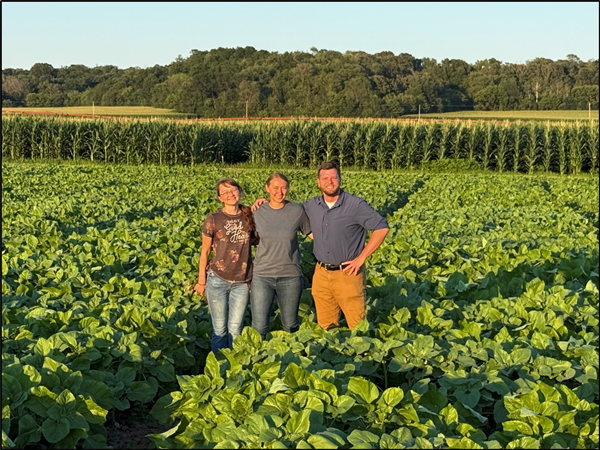 |
| Austyn Steinhaus (left), who is currently working on her master’s degree in plant science at South Dakota State University, and Mekelsy Sundby (center), who recently accepted a master’s position in the same lab, were both on Brandt Berghuis’ research team at River Falls. |
Honoring Industry Legacy
Reflecting on his journey from undergraduate student to leading his own research program, Berghuis highlights his experience as a Curt Stern Scholarship recipient as a foundational marker. Established in memory of sunflower industry leader the late Curt Stern, this annual award, sponsored by NSA, supports students committed to sunflower production and research.
“The Curt Stern Scholarship is a huge honor, and it reflects on the legacy of the sunflower industry,” Berghuis states. “This scholarship not only supports the next generations of sunflower growers and researchers, but highlights the collective support that the sunflower industry shares and how we all play a vital role together.”
Looking ahead, Brandt Berghuis plans to maintain robust greenhouse and field trial programs to deliver clear, actionable management strategies directly to growers. Whether testing fungicide formulations or screening emerging genetic lines, his focus remains firmly on supporting the production community. — Sonia Mullally