By John Sandbakken*
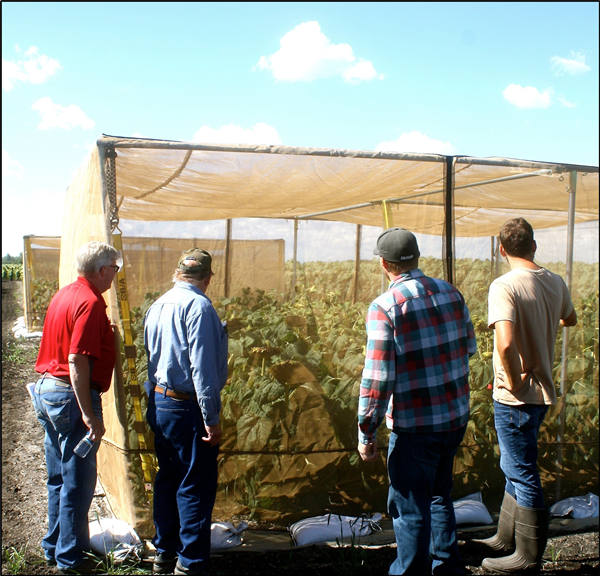 As the sunflower industry looks toward the 2027 growing season, public agricultural research will remain a critical tool for improving profitability, protecting yield potential and addressing new challenges facing producers.
With production costs remaining a major concern, and pests, diseases, weeds and weather continuing to threaten yields, research priorities are increasingly focused on practical solutions that can move from university plots to farmers’ fields.
The National Sunflower Association (NSA) provides funding to public researchers with the goal of stimulating research that can lower production costs, increase quality and improve yields. Its research priorities traditionally focus on production, insects, weeds, diseases, genetics and product utilization.
For 2027, genetic improvement and yield stability will remain at the top of the research agenda. Modern genomic tools offer opportunities to accelerate development of sunflower hybrids with improved yield, disease resistance, insect tolerance and adaptability. USDA Agricultural Research Service researchers are already using long-term field data and genomics to better understand how genetics, climate and plant development interact to influence sunflower performance.
“Yield is important, but it’s not the only thing we need,” says Josh Greff, NSA first vice president and Regent, N.D., producer. “We need hybrids that can handle the weather, stand through harvest, and hold up against the insects and diseases we deal with every year.”
Another major priority will be developing practical solutions for red sunflower seed weevil. Insecticide resistance has increased the urgency of this problem, particularly in areas where the pest is limiting sunflower acreage. Research needs to go beyond evaluating additional insecticides to also include insect biology, population movement, genetics, scouting, thresholds, cultural practices and other integrated pest management strategies. “We need researchers working on the problems we are actually seeing in the field,” affirms Chuck Todd, NSA president and Onida, S.D., producer. “When an insecticide stops working, we can’t wait several years for an answer. We need research that helps us stay ahead of resistance and keeps effective tools available.”
Weed management will also require continued attention. Palmer amaranth, waterhemp, kochia and horseweed are becoming increasingly difficult to control as herbicide resistance expands. Public research can play an important role in evaluating new herbicide combinations, residual programs, application timing and strategies that protect existing modes of action. Research on new desiccant options and improving pre-emergence weed control will also be important.
Disease research should remain another cornerstone of the 2027 program. Phomopsis stem canker, rust and downy mildew continue to create challenges, while Sclerotinia remains a long-term priority for the sunflower industry. Research into pathogen biology, disease races, genetic resistance, fungicide effectiveness and integrated disease management can provide producers and plant breeders with better tools. Recent public research has already focused on identifying rust races and improving the genetic resources available to breeders.
Finally, public research should continue examining sunflowers’s value beyond the farm gate. Quantifying the crop’s environmental benefits, carbon footprint, potential for carbon sequestration, renewable diesel contribution and nutritional value can help strengthen existing markets and develop new ones. These goals align closely with current USDA research priorities emphasizing farm profitability, new markets, environmental stewardship and food quality.
The common thread across these priorities is simple: research must deliver measurable value to sunflower producers. Public universities, USDA researchers, Extension specialists and industry partners have an important opportunity in 2027 to work together on problems that individual producers cannot solve alone. Continued investment in public research will be essential to developing the genetics, production practices and pest-management tools needed to keep sunflower competitive with other crops and profitable for farmers.
“Public research gives producers information we can actually use,” Tom Dowdle, NSA second vice president and Kennedy, Minn., producer affirms. “We need that investment to continue, because the challenges facing agriculture aren’t standing still.”
As the 2027 research agenda takes shape, the strongest priorities will be those driven by producer needs and supported by collaboration among universities, USDA agencies, commodity organizations and producers. Continued investment in practical, science-based research will be essential to keeping sunflower profitable, sustainable and competitive for years to come.
The list below specifies “areas of interest” as outlined by the NSA Research Committee. This is not an exclusive list, and the committee will consider all production areas of research.
Research Areas of Interest
(Listed in order of priority)
Production Issues —
The #1 priority for the National Sunflower Association is improved genetic progress in sunflower to enhance competitiveness with other crops and stability of yield and quality using genomic tools.
Other needs are:
a. More local/regional focused varietal screening, including Extension and industry, public and private lines.
b. Blackbirds: Innovative and new approaches to reduce damage, including laser hazing, discovery of new repellents and/or changes to plant physical characteristics.
c. Early, mid- and later planting date studies are needed to mitigate insects, diseases and crop maturity effects from too-early and/or too-late planting on a state and/or regional basis.
d. Crop morphology, including standability, kernel separation, protein, head shape and bird susceptibility.
Insects —
The #1 priority is red sunflower seed weevil (RSSW) challenges that are inhibiting South Dakota sunflower acreage. The issue is larger than just insecticide resistance and may also include RSSW biology, genetics and seasonal population dispersion. An “All of the Above” approach is needed, including monitoring possible insecticide resistance/tolerance in North Dakota.
Other needs are:
a. Evaluation of IPM strategies (scouting, trapping, thresholds, insecticide testing [especially new modes of action], cultural, biological) for control of economically important insect pests of sunflower, including red sunflower seed weevil and Dectes stem borer.
Weeds —
The #1 priority is innovative weed control strategies using existing and experimental chemistries to address Palmer amaranth, horseweed (marestail), waterhemp and multiple MOA resistant kochia.
Other needs are:
a. Encourage research for new desiccant active ingredients.
b. Weed species shifts, due to resistance/tolerance to common modes of action, need to be considered for burndown uses, as well as existing post systems like Clearfield® and Express®Sun.
c. Define herbicide sunflower safe pre-emerge intervals, even during a drought. Preservation of and MOA resistance management for the post-emerge Group #1 grass products. Residual herbicide uses in sunflower and plant-back intervals need to be clarified better on product labels.
d. Group 15 efficacy demonstrations, including improving pigweed, kochia and grass species control and how layering modes of action used in sunflower can benefit rotation crops such as wheat and corn. Emphasis on timing (late fall versus spring) for layering residual modes of action to lessen over-reliance on spring burndown.
Diseases —
Phomopsis stem canker is the #1 disease priority for the National Sunflower Association. Proposals aimed at studying pathogen biology and improving (or leading to the improvement of) disease management tools, including Phomopsis prediction modeling.
Other needs are:
a. Rust includes identifying races and the control of rust via genetic resistance and fungicide application.
b. There is continued interest in downy mildew with the development of new races and fungicide efficacy. Proposals looking at genetic resistance along with seed treatments with multiple modes of action will be of interest.
c. Rhizopus can be a concern after the head is damaged by insects, hail or other factors. Determining if there are management or mitigating strategies to reduce the impact of the disease is important for growers.
Product Utilization & Environmental Impacts —
The #1 priority for the National Sunflower Association is quantification of sunflower’s carbon footprint and environmental sustainability, including the renewable diesel industry and carbon sequestration impacts.
Other needs are:
a. Novel compounds in seed that have intrinsic values, including nutrition alternatives and sunflower as a protein source.
If you would like to hear more about what is happening in sunflower research, consider attending the annual NSA Sunflower Research Forum. The Forum is a popular and well-attended event and will be held next year at the Holiday Inn in Fargo, North Dakota.
The purpose of the Forum is to report on research, to promote discussion, and to stimulate creative thinking. The 2027 National Sunflower Association Research Forum is scheduled to begin on Wednesday, January 13, and conclude at noon on Thursday the 14th. Visit the NSA website — www.sunflowernsa.com — for more details
If you can’t make it to the Forum, you can learn more about NSA-funded research projects by going to: http://www.sunflowernsa.com/research/. There you’ll find an online searchable database of more than 30 years of sunflower research papers.
* John Sandbakken is executive director of the National Sunflower Association.