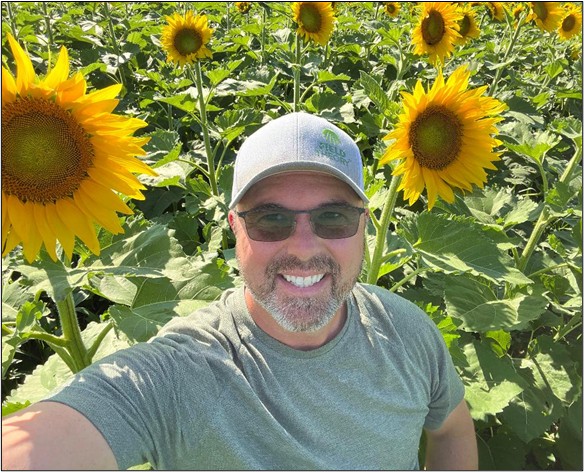
John Strohfus never meant to be a farmer.
He grew up on a farm near Hastings, Minn., just 20 miles outside Minneapolis. His family raised horses and hay to feed them, but his dad’s life occupation wasn’t that of farmer; he spent his career working for Coca-Cola.
“My dad was able to acquire our small farm through his savings, working as an executive at Coca-Cola,” explains Strohfus, who left that farm after high school to study marketing and information technology at St. Cloud State University. He spent 19 years in business working in IT before coming home to the farm.
“I took over our farm in 2010, about two years after my dad passed away,” he relates. “My dad was a farm kid, from Hazel, S.D., just south of Watertown. I was a farm kid, so I sometimes say I’m a third-generation farmer; but I’m only the second generation on this land we live on now.”
In 2010, Strohfus took his family farm to the next level while continuing to work full-time off farm. He and his wife, Jeanie, started by adding a few head of cattle for direct-to-consumer / freezer beef. They took back the land they’d been renting out to plant more hay and expanded their commercial horse boarding operation to 60 head of horses.
In 2016, seeking new opportunities, Strohfus became Minnesota’s first hemp grower and founded Minnesota Hemp Farm, Inc. Two years later, in 2018, he left his full-time job to focus on building out the foods company and also concentrate more on farming.
“At that time, we didn’t have any row crops in our operation like we do now, and I was looking for ways to capture more of a premium revenue stream on our small acres” he explains. “Initially, I thought hemp foods would be the ticket. I knew if we were the first to get going, we’d have an advantage — and that has worked out well.”
Strohfus focused on the food market and was successful selling finished ingredients to food brands. He says the hemp market is very niche still today and now makes up only about 10% of his overall ingredient business. He’s found other crops and ingredients that he is successfully selling — but it all started through those initial connections made from marketing hempseed products.
“For example, I was already supplying hulled hempseed to Simple Mills,” he recalls. “So, in 2020, when they had an idea for another product, they came to me and said, ‘We want to have direct source, transparently grown organic sunflower. Can you help us with that?’”
Strohfus readily admits he didn’t know anything about sunflower; but he didn’t know anything about hemp years ago, either.
“I knew it was a crop that’s been grown forever in this region, and I knew we could grow it on our farm,” he states. He just needed to figure out specifically how, and he also needed to learn more about regenerative agriculture — which at the time was a fairly new term.
Strohfus had to learn quickly; that initial call came in mid-February, not a lot of time for producers to make changes to their planting intentions.
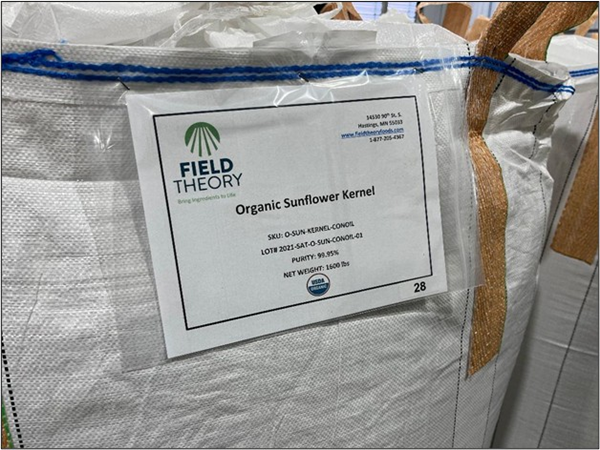 He and three other Minnesota growers took a leap and planted 300 total acres of organic sunflower in 2020 for Simple Mills. The company, known for gluten-free crackers and cookies, launched their new organic seed flour cracker in 2021. Now, six years later, 10-15 growers plant more than 700 acres for Simple Mills’ crackers.
Strohfus has immersed himself into learning everything he can about regenerative agriculture, and he’s passionate about sharing his knowledge with other producers. His company now goes to market as “Field Theory Foods” and specializes in connecting brands with regenerative verified growers.
Field Theory growers now also grow conventional / non-organic sunflower for another large brand called Seven Sundays. Seven Sundays is based in Minnesota and makes a unique cereal product using sunflower protein.
“Through the expansion of that work we have increased acres of sunflower to over 3,000,” Strohfus says. “We have growers planting sunflower in places where there aren’t sunflower markets, including southern and western Minnesota, Wisconsin, Indiana — and I’ve even got someone in the delta region of Arkansas growing sunflower for us this year.
“The Arkansas growers are really hurting with the rice market decline; they were looking for something else to grow, and we were able to help. Those are not traditionally normal sunflower growing states, so we’re bringing the market to them. We provide the seed, arrange post-harvest transport for them and we also provide regenerative per-acre bonuses that are directly sponsored by our buyers. That’s all written into the contracts, so it’s a low-risk entry into growing sunflower if they have not done so before.”
 Strohfus’ own operation has changed since he took the chance at growing sunflower. He produces both organic and conventional sunflower now, and in 2025 his organic outyielded his conventional sunflower. And, his soil has never been healthier.
“Our typical rotation is corn, then sunflower, then buckwheat followed by a bean of some sort,” Strohfus says. “Sunflower is a great clean-up crop for nutrients, especially nitrogen. There are a lot of nutrients in the soil that sunflower can scavenge for, given its massive root system.”
Strohfus is also on the board of directors for the Minnesota Soil Health Coalition, a farmer-led organization dedicated to providing education, farmer-to-farmer mentoring, networking and plain language technical information. “We’re trying to educate farmers that there is a better way to produce crops; and the better your soil health, the better crops you’ll grow.”
And, Strohfus emphasizes, don’t be afraid to try new crops. In fact, he says the more unconventional the crop, the better the opportunity probably is. This year he’ll plant corn, soybeans, sunflowers and alfalfa, which he’ll use to make hay for his horses. He’ll also plant organic buckwheat, small red edible beans and heirloom corn for which he already has arrangements to sell to a snack company. He may also plant popcorn for that same company.
“If it’s common, I usually don’t want any part of it,” John Strohfus concludes. — Jody Kerzman