It’s Being Researched & Marketed as a Key Component in a Rapidly Growing Sector: Plant-Based Cheese
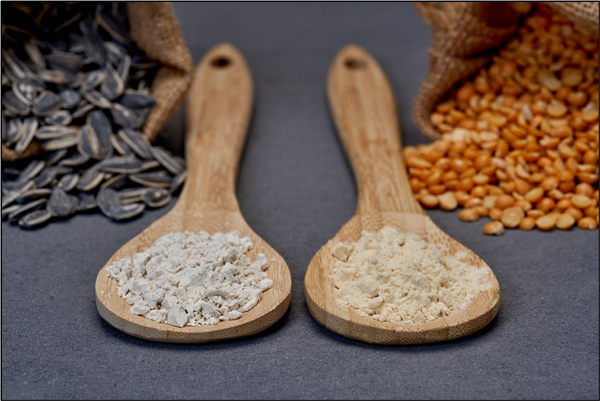 |
Burcon NutraScience’s Solatein™ sunflower (left) and Peazazz®C pea (right) protein isolates. |
Among the sunflower seed’s broad range of uses is one which most producers and other industry insiders probably have never heard of: as a component of plant-based cheese — a multi-billion-dollar international market with big growth expectations.
Vancouver, B.C. -based Burcon NutraScience Corporation, a leader in plant-based protein innovation, produces and markets a sunflower protein called Solatein™. It is a 90%+ protein iso-late featuring a neutral flavor, off-white color and distinctive functional properties. The company labels Solatein as “ideal for use in a wide range of food applications, particularly those requiring delicate flavors.” Like Burcon’s successful pea protein isolate (Peazazz®C), Solatein is a clean-label product, hypoallergenic, non-GMO and processed from a sustainably sourced crop.
A recent study conducted by Alejandro Marangoni, professor and Tier 1 Canada Research Chair in Food, Health and Aging at the University of Guelph (Ontario) has evaluated both the Solatein and Peazazz C protein isolates in a plant-based cheese formulation.
Marangoni’s lab is a leader in developing advanced plant-based cheeses, focusing on creating nutritious, sustainable alternatives that melt, stretch, and taste like dairy using ingredients like pea/faba proteins, starches, and oils (coconut/sunflower). In recent years, it has developed patented technology in that field of research.
Marangoni’s University of Guelph lab — which includes Stacie Dobson, co-inventor of the plant-based cheese technology and currently a postdoctoral fellow in the lab — found strong performance by both the pea and sunflower isolates in terms of objective texture analysis (cold hardness, shred efficacy, melting and stretch) and in sensory evaluation (taste, aroma and color).
“Sunflower, like many other plant seeds, contains significant amounts of protein,” Marangoni points out. “Proteins are isolated from the endosperm of seeds by alkaline water extraction, followed by neutralization and drying. These isolates can be up to 90% protein.” Sometimes, however, plant seed proteins do have particular tastes that are not ideal for a “dairy-like” product, Marangoni adds. For example, soy can have a “beany” flavor.
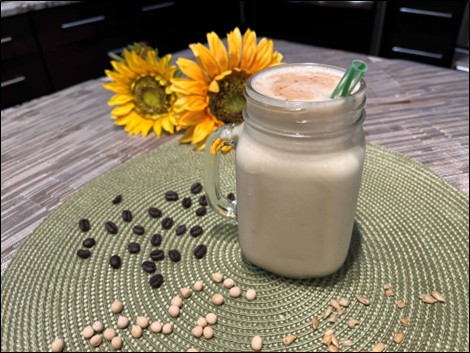 |
Burcon showcased its cafe latte pea and sunflower protein cold beverage at the 2025 Institute of Food Technologists annual meeting and exposition. |
Martin Schweizer, vice president-technical development for Burcon, says consumer interest in plant proteins is being driven by three key factors: a growing desire for healthier lifestyles supported by plant-based diets; increasing demand for sustainable, planet-friendly food options; and, the emergence of a new consumer group using GLP-1 (glucagon-like peptide) weight loss medications who are seeking more nutrient-dense foods.
“There is a strong, growing trend towards incorporating protein into foods,” Schweizer remarks. “2026 should be a big year for protein nutrition and demand for plant proteins.”
To deliver on the increased consumer interest, Schweizer says plant protein foods and beverages must enhance their taste and appeal, since taste “is the deciding factor in driving the speed at which consumers take up plant-based protein products.”
The Burcon executive says the company’s next-generation plant proteins — in particular the Solatein sunflower protein — “has seen significant demand due to its neutral flavor profile, aroma and color.” Solatein is, he adds, “ideal for use in ready-to-drink beverages, ready-to-mix beverages, nutritional beverages, dairy alternatives, plant-based cheeses, baked goods and bars, [and in] meal replacement products.”
The University of Guelph’s Marangoni says the particular sunflower protein isolate from Burcon “has a very pleasant neutral taste and the physical characteristics required to excellent performance in plant-based cheese.”
Schweizer says Burcon is in touch with “hundreds of plant protein innovators.” The company believes that high-quality next-generation plant proteins will fuel the next upswing in plant protein products. “Sunflower has a fantastic brand image around the world, and our sense is that it will be in high demand for inclusion in many products,” he concludes. — Don Lilleboe